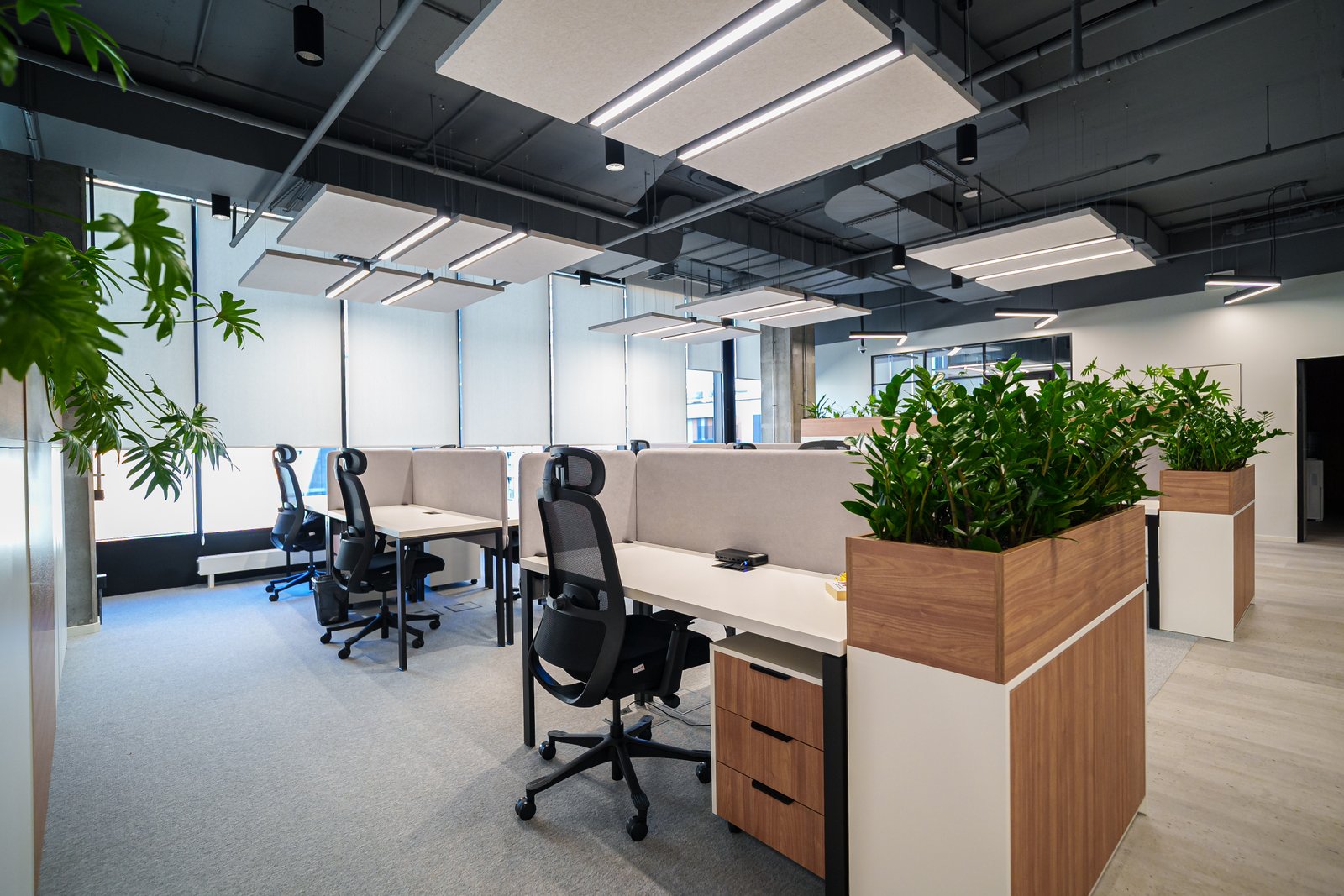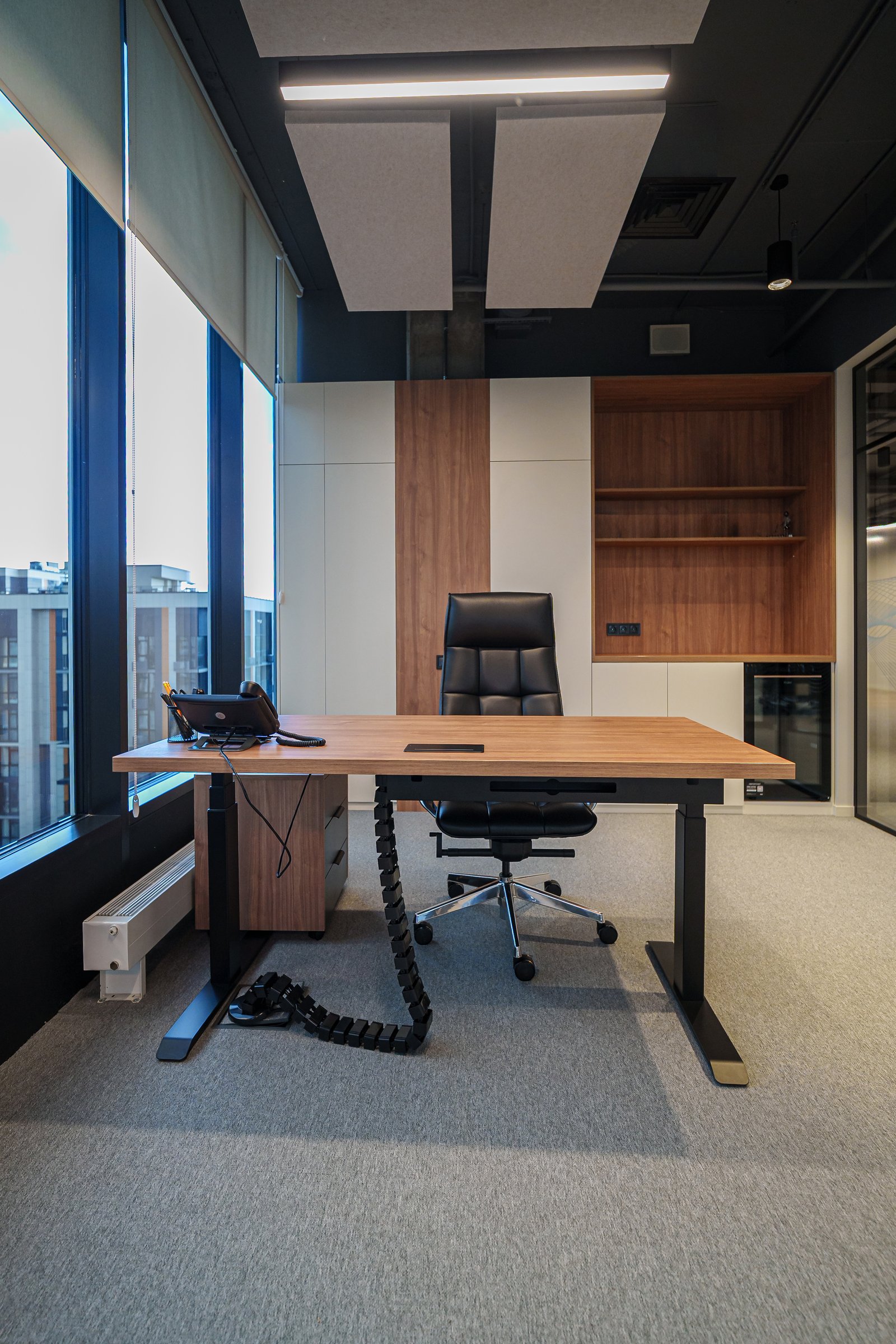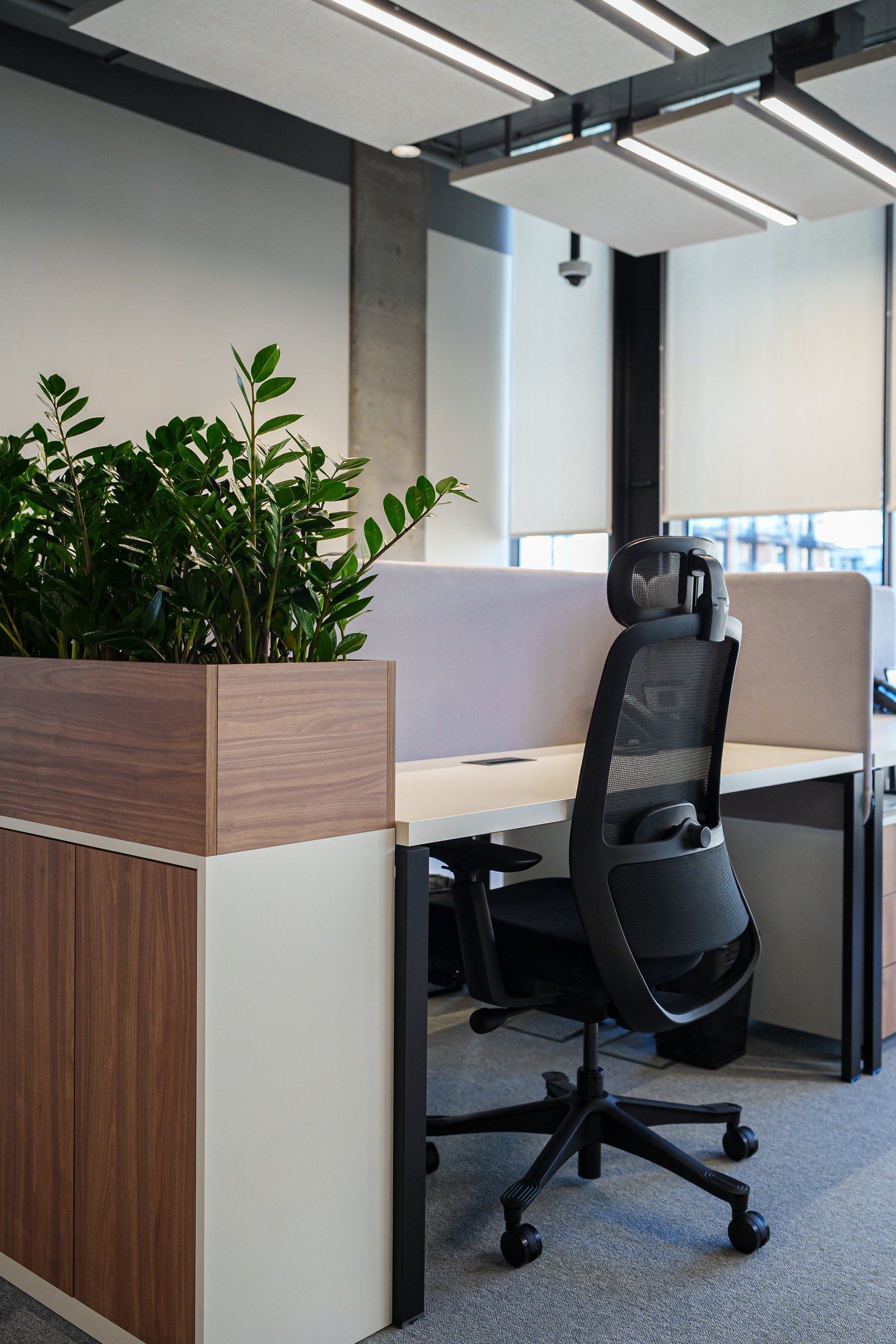
A large office is always a balancing act. On one hand, the space needs to “breathe” — to be bright, open, and not overwhelm people with its scale. On the other, every team needs its own territory, quiet for focused work, and places to switch off and connect. When we started working on this design project, that was exactly our main goal: to create a space that breathes yet stays functional for everyone who works in it.
Today we’re sharing the final result — and the key decisions from the concept that now work in reality.
The Geometry of Light: Dynamics and Quiet in One Space
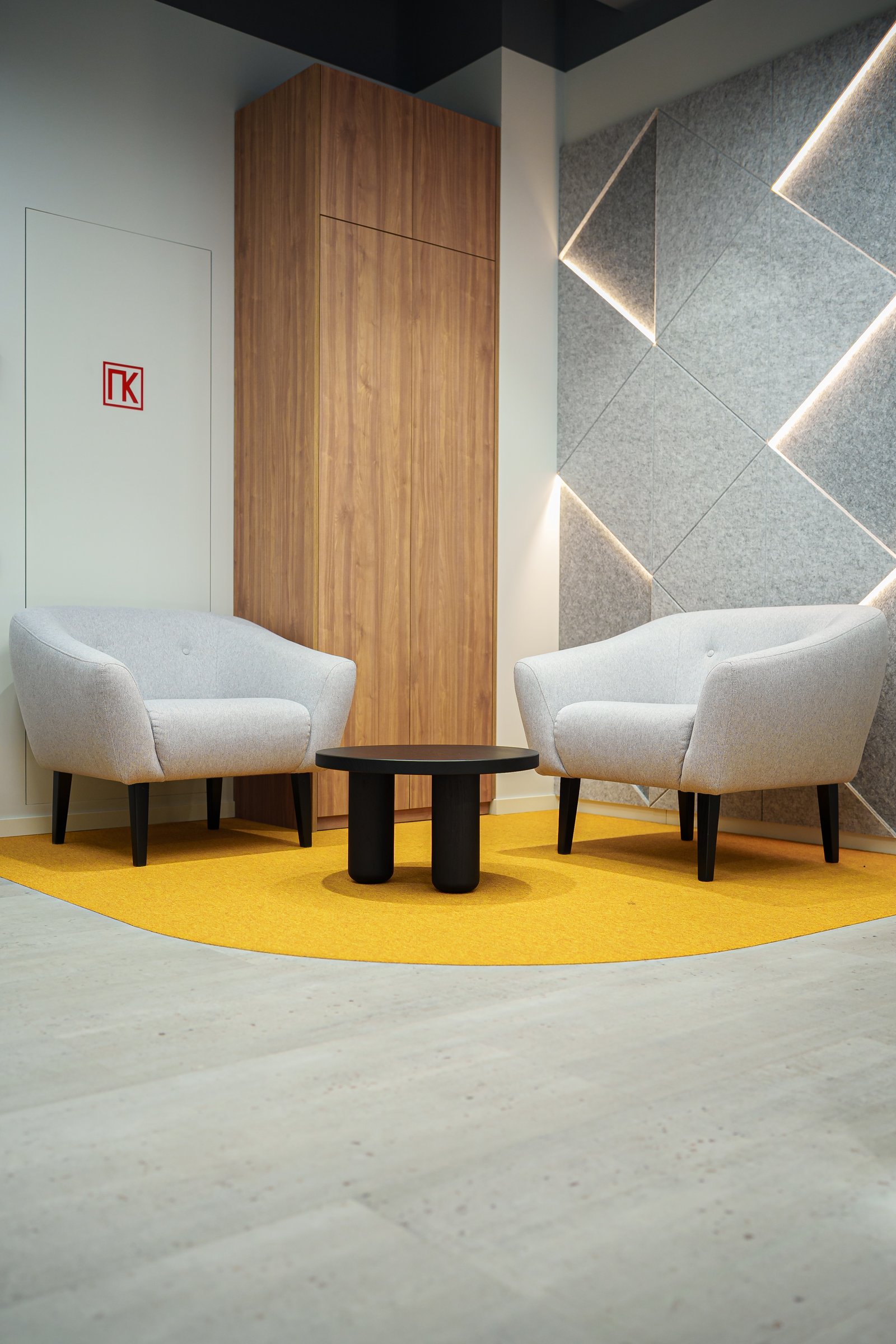
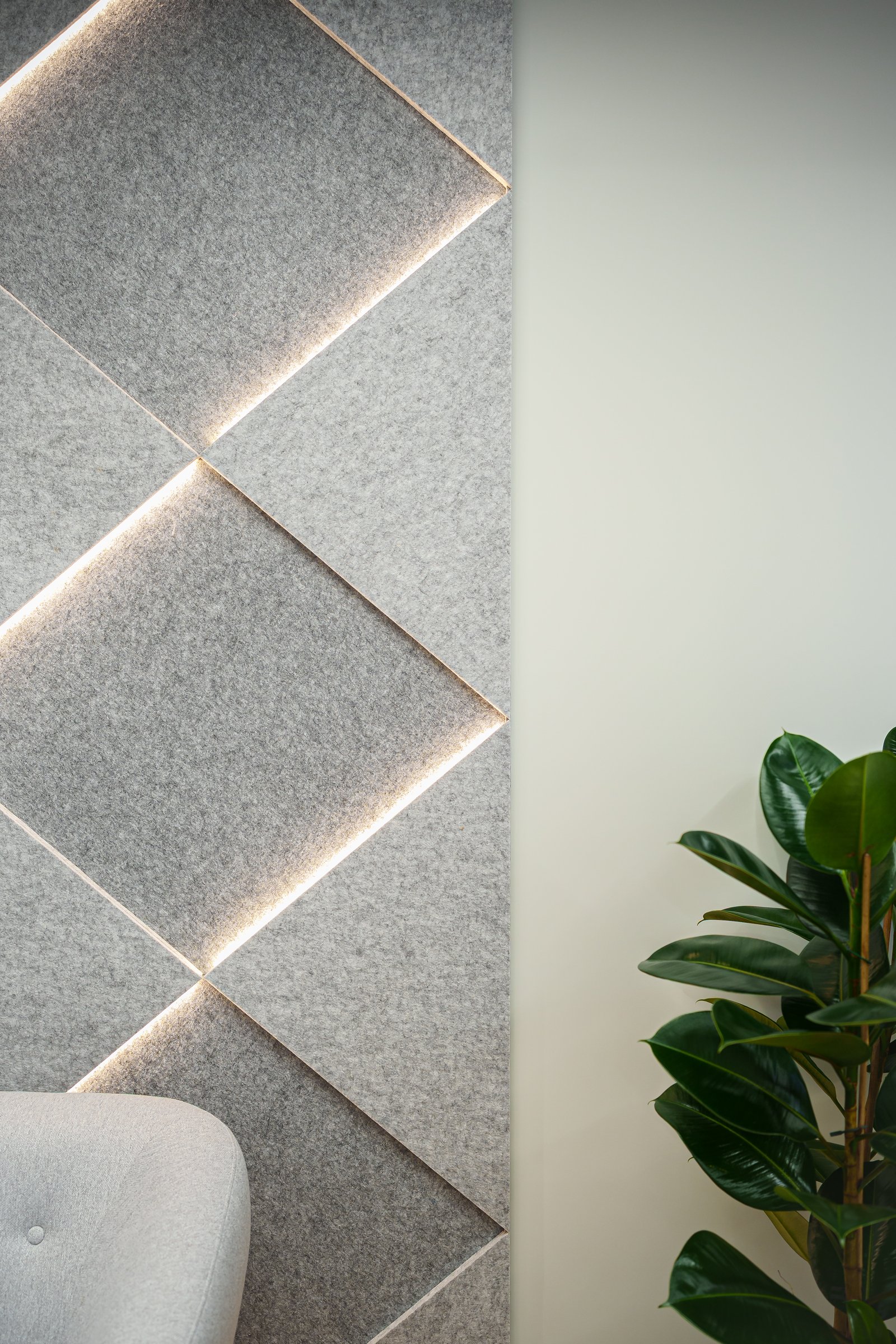
Lighting in a large office isn’t just about brightness. It’s about mood, rhythm, and navigating the space. We treated light as a full-fledged architectural tool.
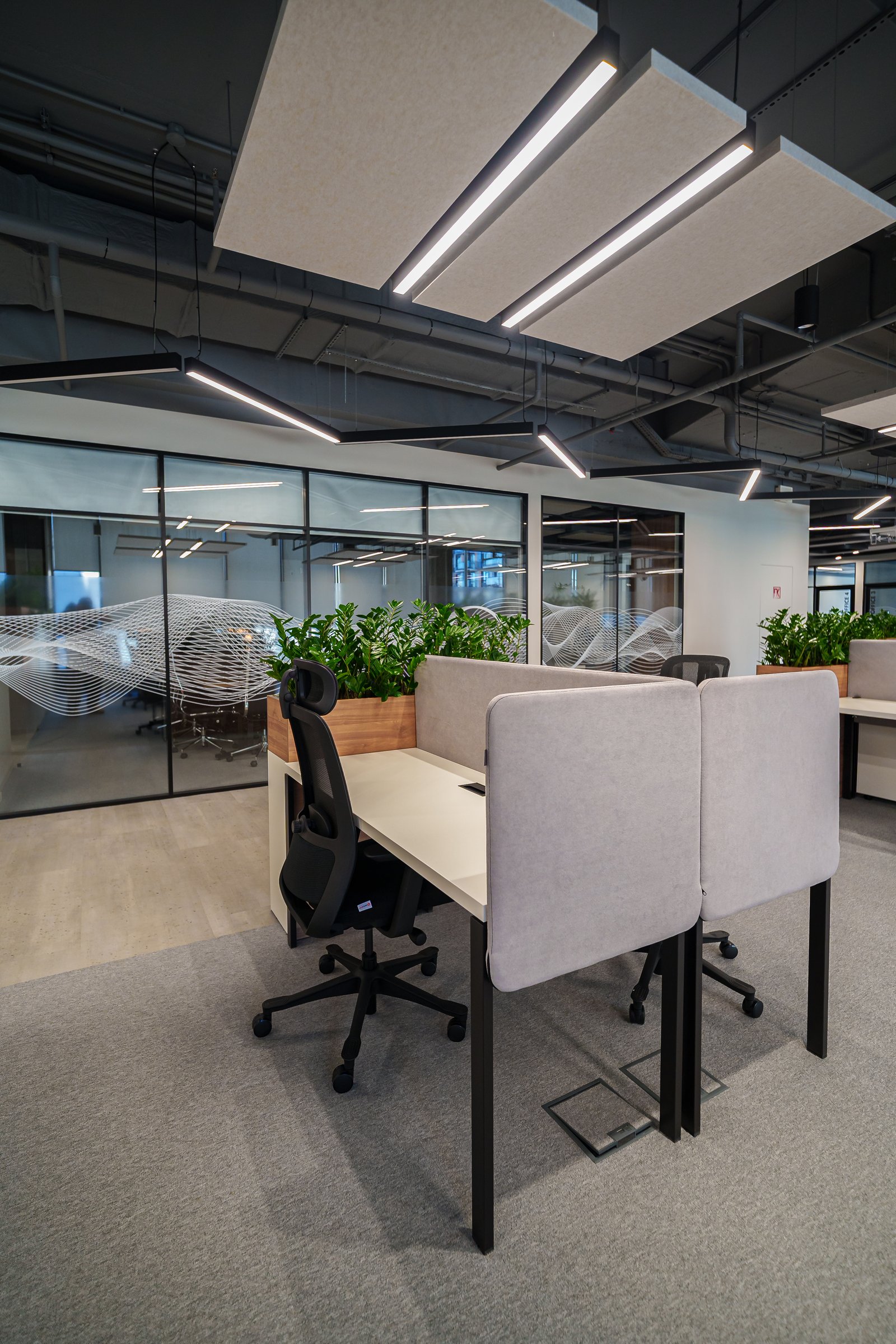
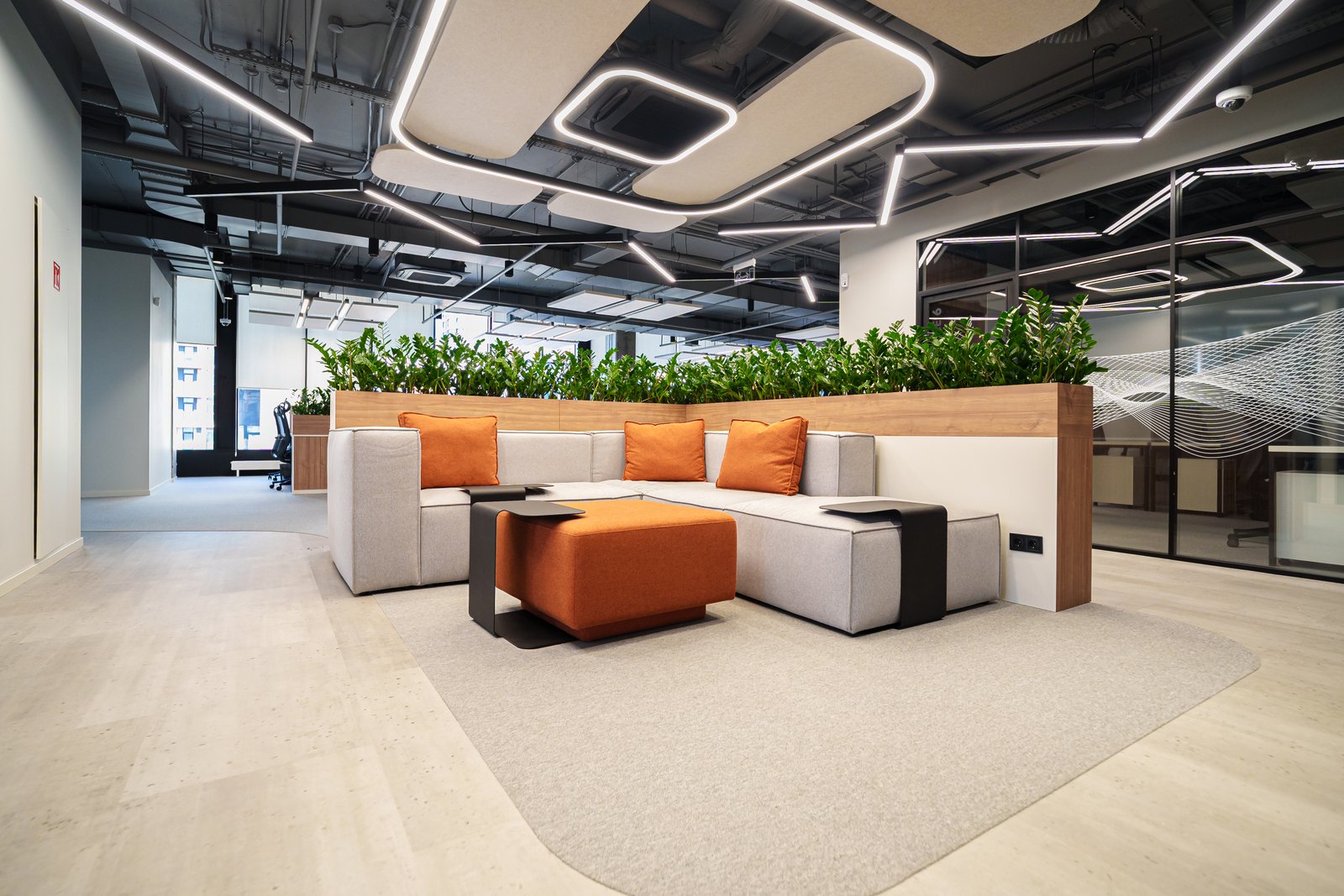
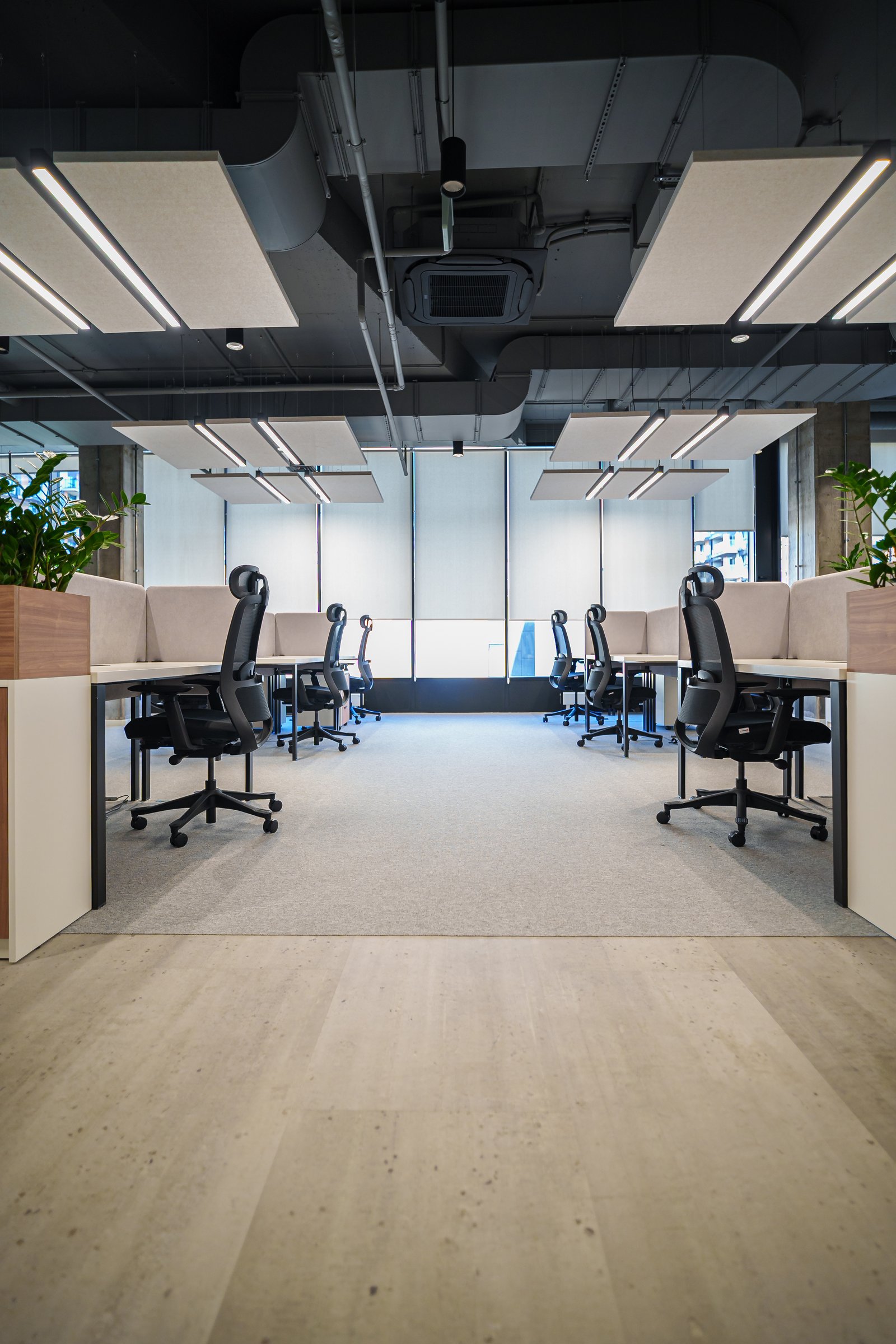
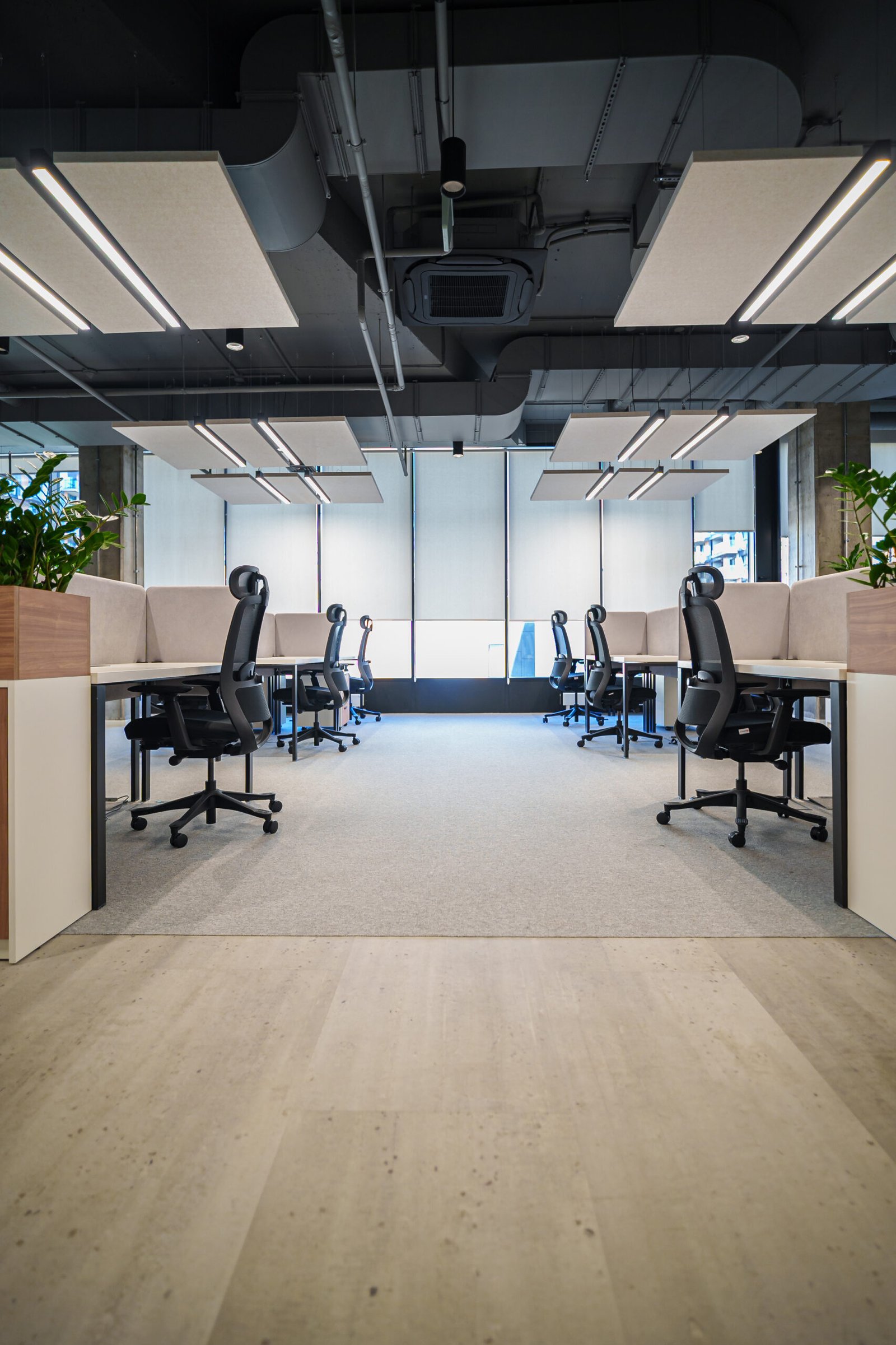
In the corridors, we used the broken lines of suspended luminaires. They create movement, guide the eye along the space, and turn transit zones into more than just passageways — they become part of the overall design narrative. This geometry adds dynamism and character to the interior.
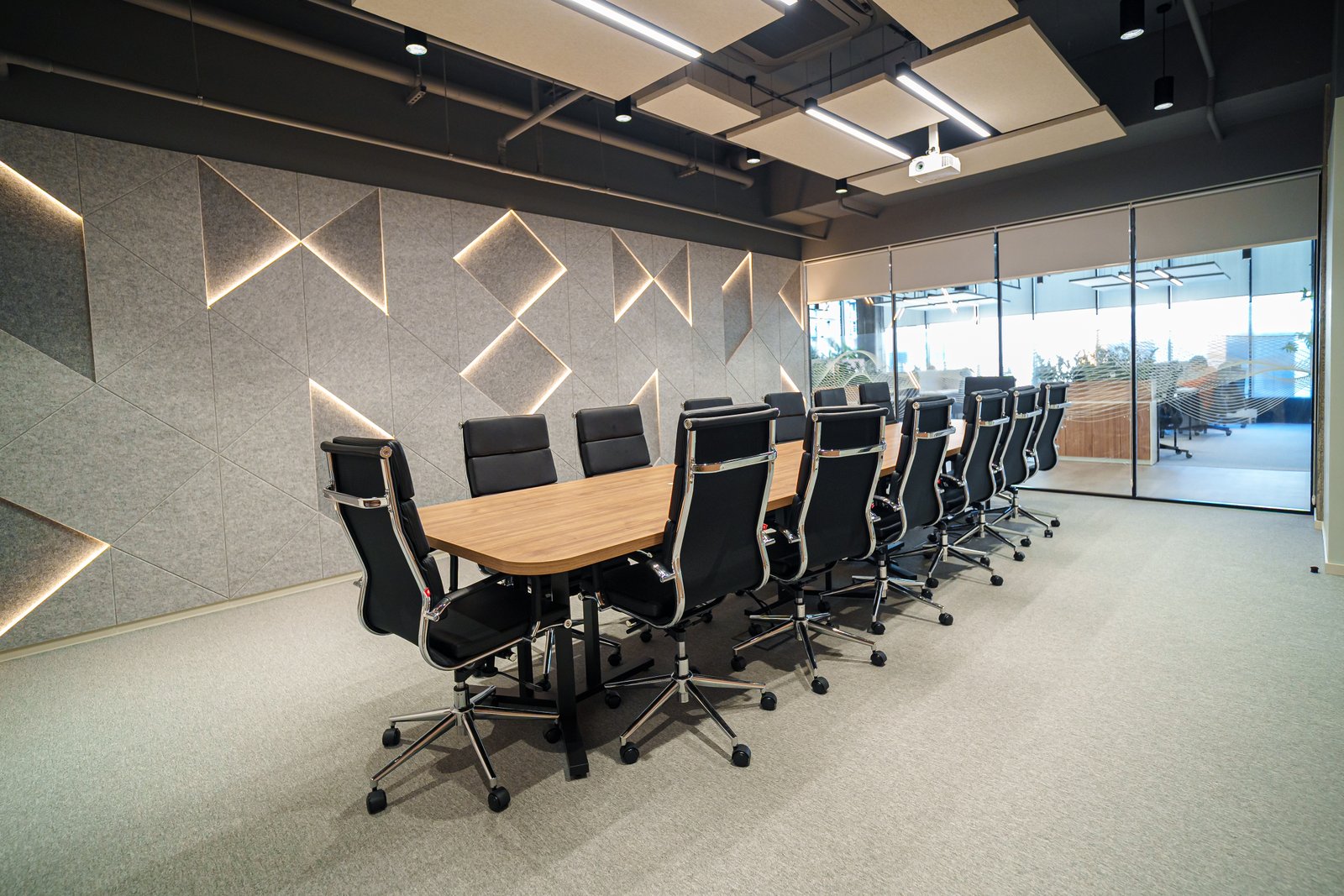
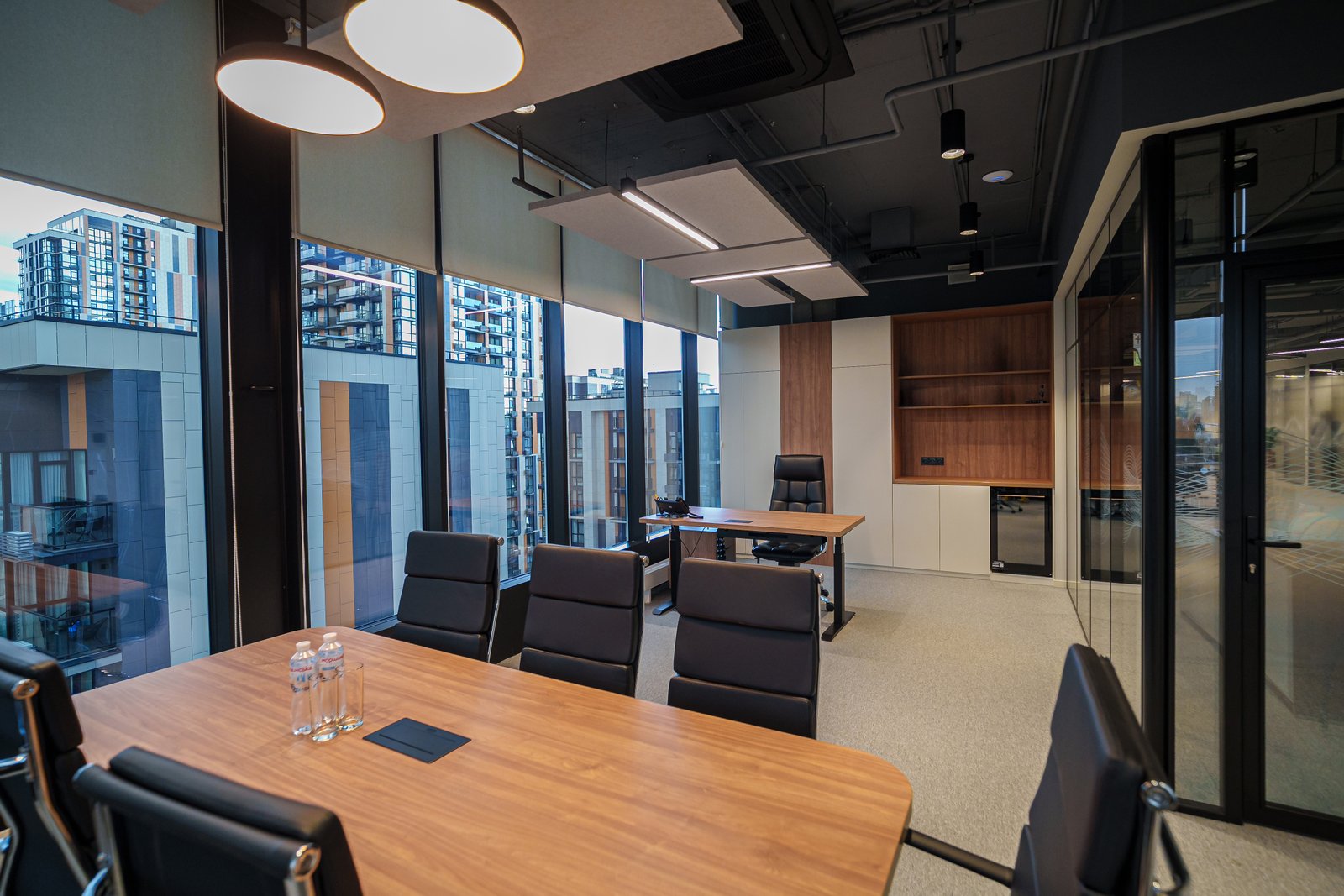
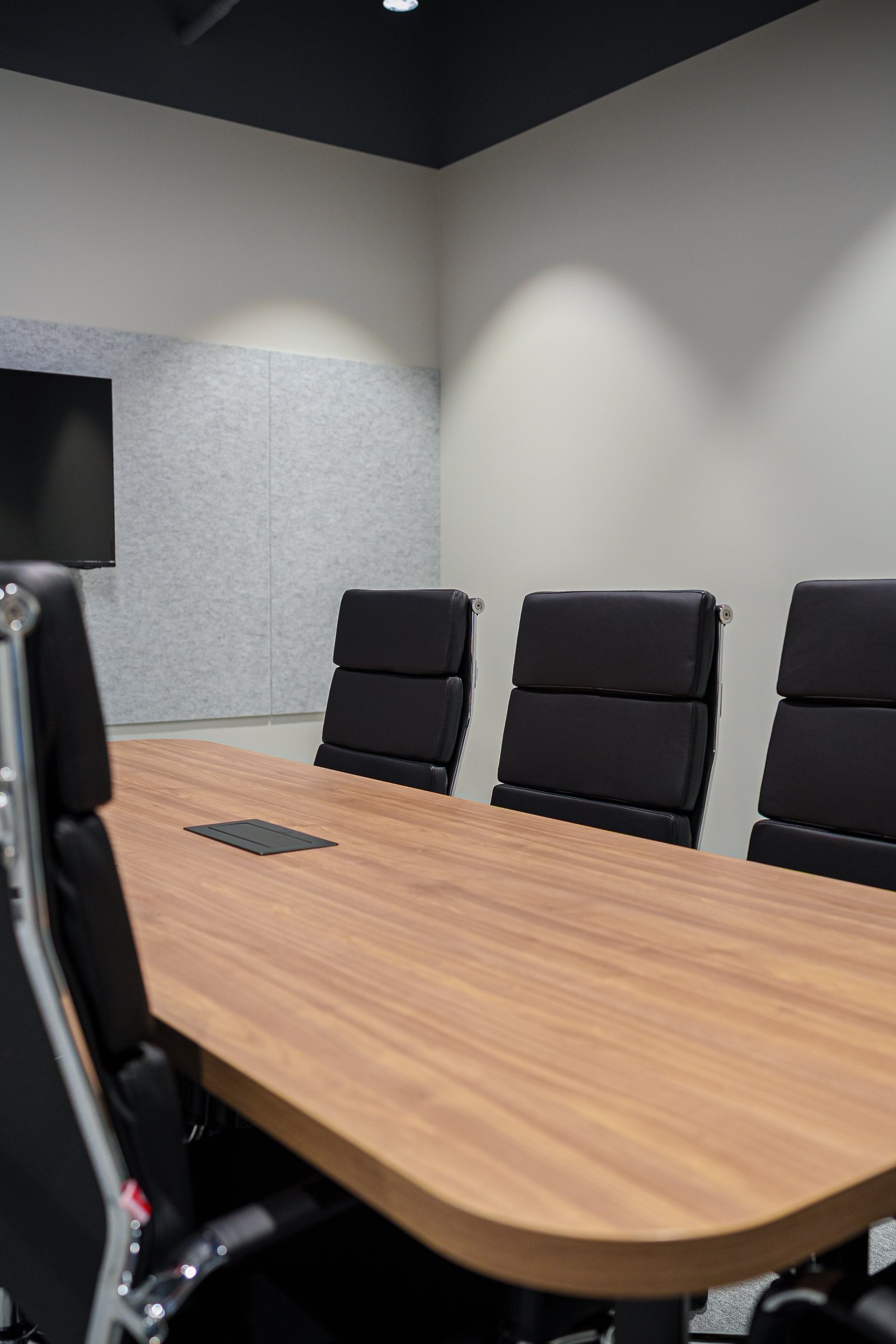
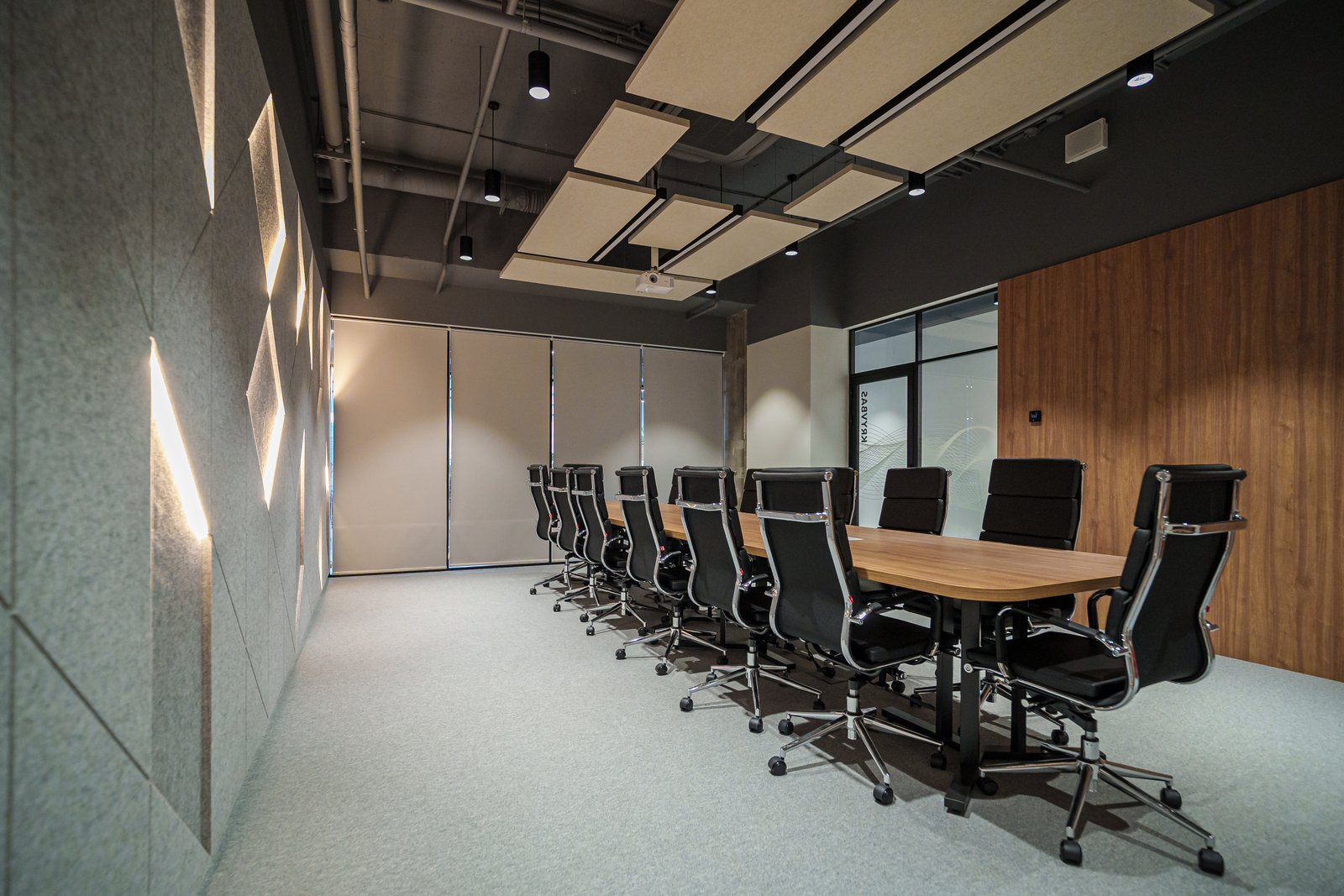
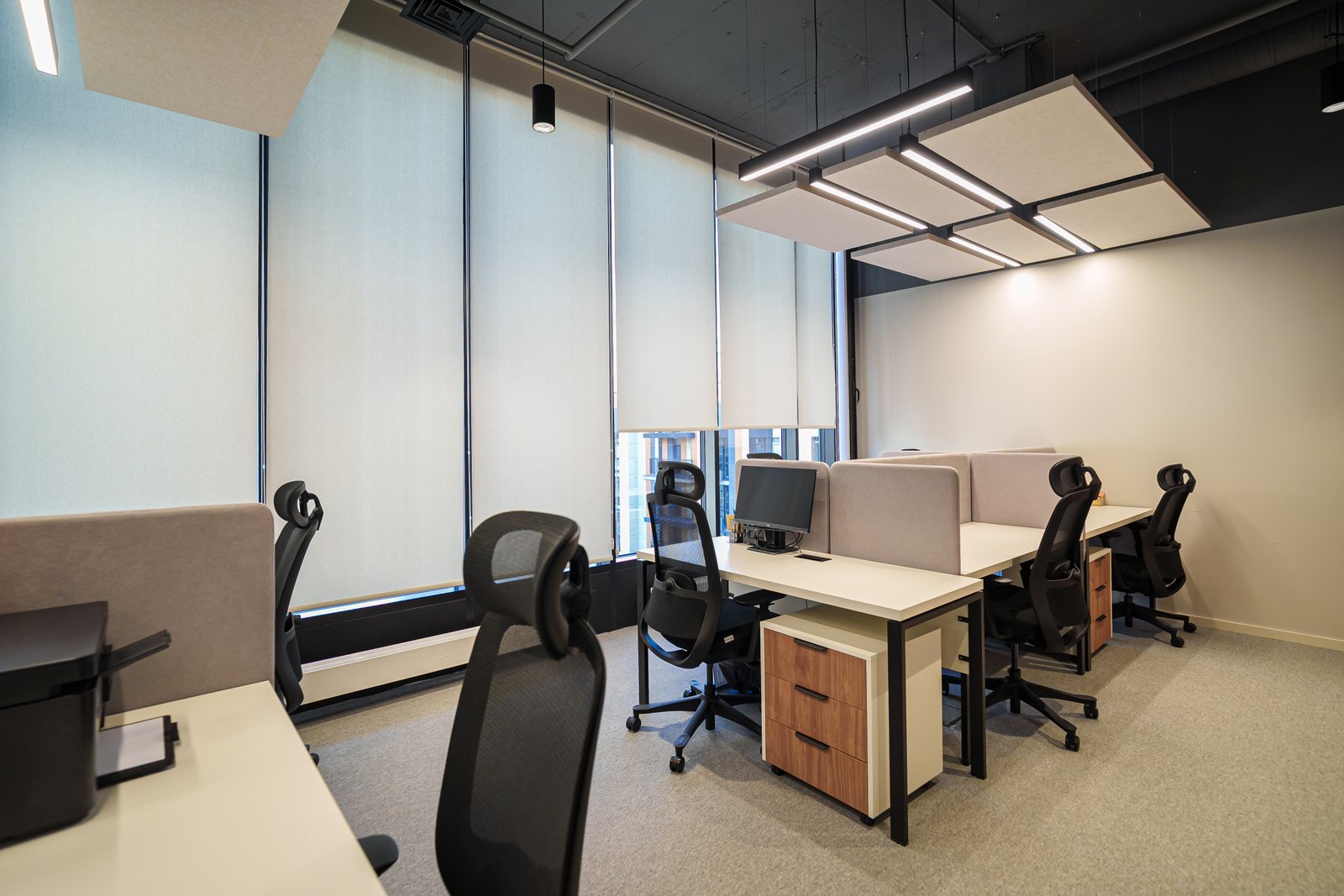
In the work areas, the logic is the opposite — here you need calm and concentration. Large acoustic ceiling panels softly diffuse the light, removing harsh shadows and glare, while also absorbing noise. As a result, the team gets comfortable, even lighting and a noticeably quieter work environment — two goals solved with a single element.
Color Cues: Orange Accents as Navigation
In a large space, it’s important that people intuitively understand where they are and what each zone is for. Instead of signs and labels, we relied on color.
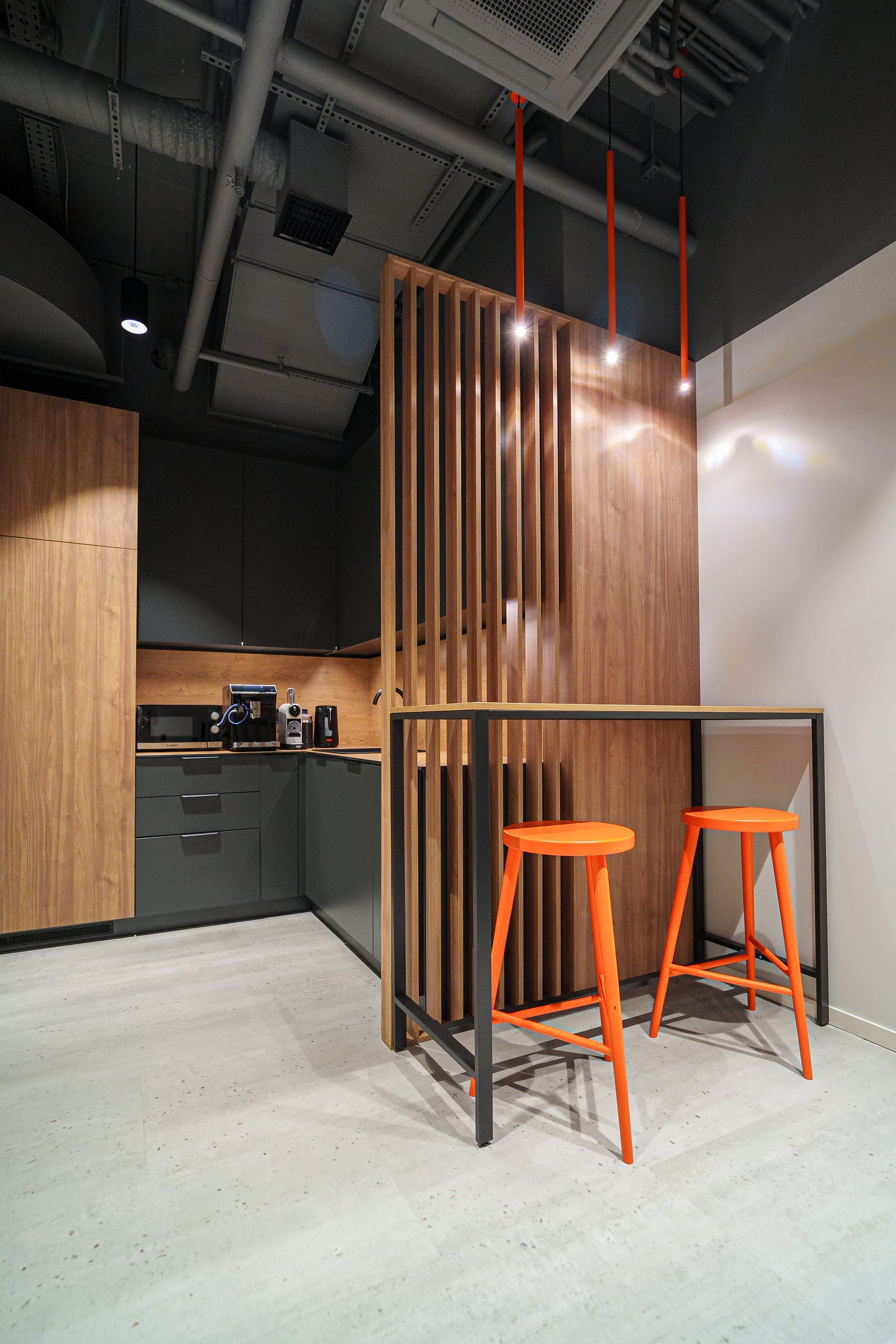
We integrated rich orange accents deliberately — not randomly, but as a system. They became visual markers for informal interaction zones: from the soft modular sofa at the center of the space to the bar stools at the coffee point. The eye immediately “reads” these bright spots as an invitation to take a break, chat, or hold a casual meeting.
This approach works on two levels at once: emotional — adding energy and vibrancy to the space — and functional — helping people orient themselves and read the purpose of each zone without extra explanation.
Privacy Without Solid Walls: Glass Partitions with Graphics
One of the subtlest balances in office design is between openness and privacy. Solid walls provide quiet and seclusion, but they “cut up” the space, making it dark and closed off. A fully open plan, on the other hand, takes away the ability to concentrate.
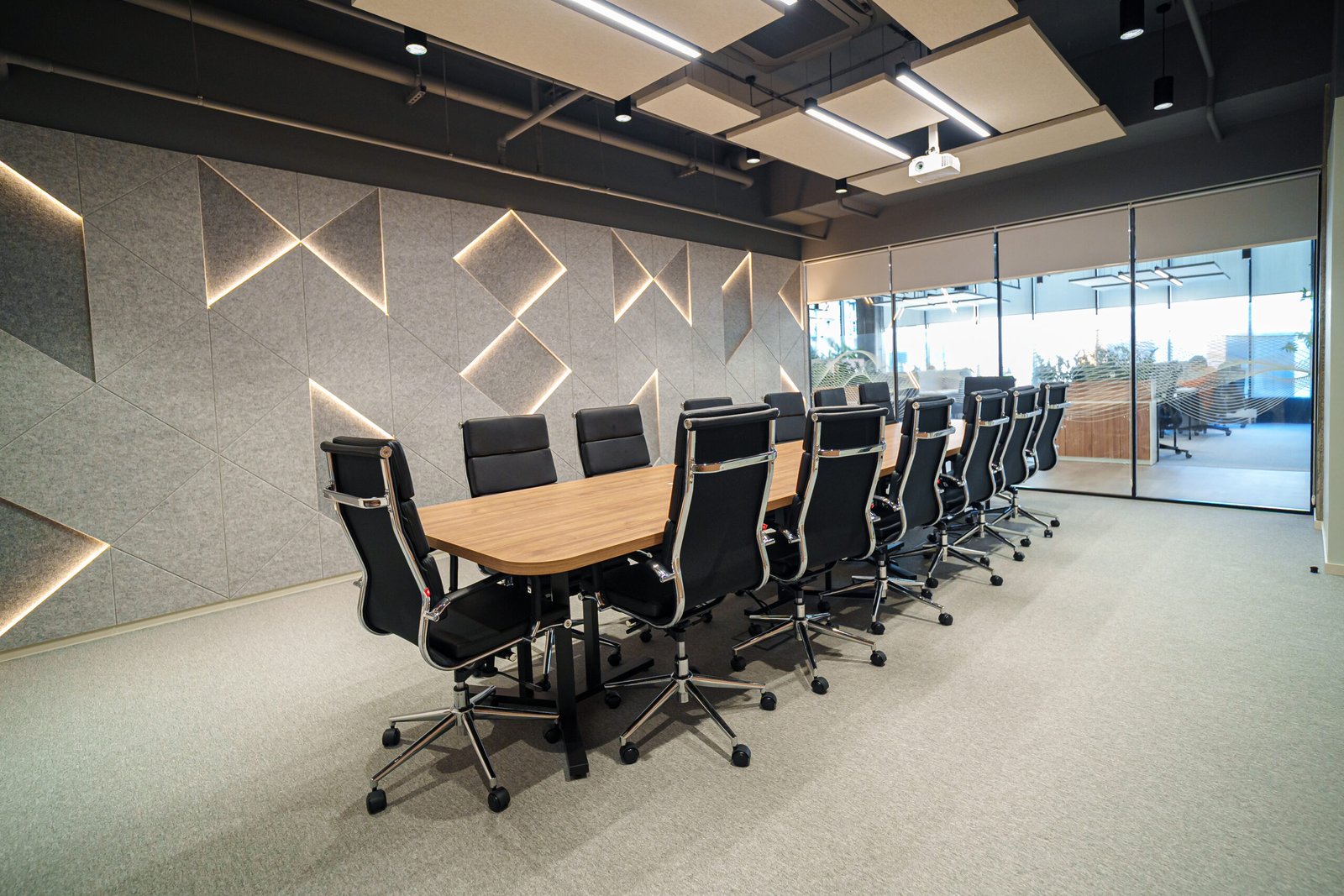
We chose a middle-ground solution — glass partitions with a delicate graphic pattern. They preserve the transparency and lightness of the office, letting light reach deep into the space, while clearly marking the boundaries of offices and meeting rooms. The graphics on the glass play a dual role: they add privacy where it’s needed and serve as a stylish decorative element that supports the overall aesthetic.
The Result: A Space Where Every Detail Is Considered
When all these decisions come together, the outcome is not just a beautiful office, but a coherent system where light, color, and materials work for people. The dynamism of the corridors gives way to the calm of the work areas, bright accents lead to relaxation spots, and glass preserves a sense of openness even where boundaries are needed.
It’s exactly this attention to the balance between aesthetics and functionality that turns square meters into an environment where people actually want to work.